
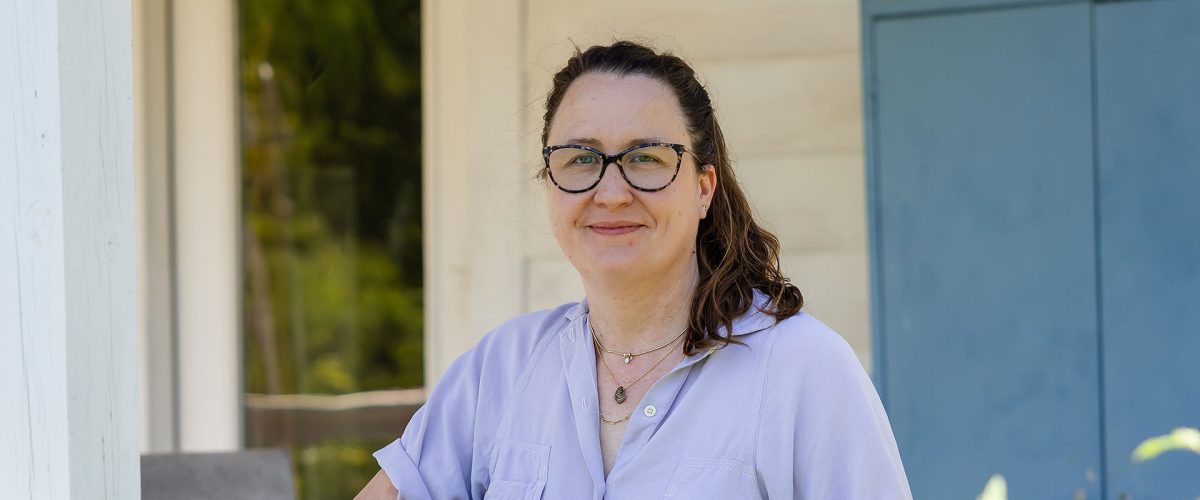
By her own admission, Angelica Mazé doesn’t operate by a master plan. Or maybe she just ignored the virtual rule book on how to plan a linear career, define yourself and live your life.
Chocolate-maker turned food writer — with a smorgasbord of food-related and writing jobs in between — she’s convinced more than a few employers to hire her with zero qualifications, never mind she’s a self-deprecating hard worker at whatever she tackles and a quick study at figuring out how to milk a random job for what she wants to learn. She’s an equal-opportunity foodie who loves xiaolongbao (Shanghai-style soup dumplings), but also a nice piece of fried Spam. Slyly observant of what makes daily life oh-so funny, if she ever gets around to writing a memoir, it might well be called The Accidental Food Writer.
I’m dying to start with the meat of food writing, but I sense it’s a progressive story. So, first of all, where did you grow up?
I was born in Japan but grew up in Saudi Arabia — my parents were ESL teachers. We were in Japan for a year and change, came back to the States for a little bit, and then moved to Saudi Arabia for my parents to teach English to employees of an oil company.
We lived on a compound, right? It’s a very weird life being an expat. There’s now a term ‘third culture’ that describes growing up with your foot in different cultures. I went to school in Saudi through ninth grade but there was no high school. So I went to high school at Millbrook School in Millbrook, New York, two hours north of the city. Then I started college at Sarah Lawrence, but I dropped out after a year and moved to San Francisco, where my sister was.
Ideas about belonging and home still preoccupy me, though in a different way as I’ve grown older. In a way, I think it’s my comfort zone to be kind of on the outside. I’m not a big joiner.
Back to San Francisco; what did you do after landing there at 19?
I first worked at an espresso bar and video rental place making terrible cappuccinos. Then I worked at an internet company at an administrative assistant job and learned some very basic HTML. I really hated working in an office.
I’m sensing a plot change here. Did you have an epiphany of some kind?
Pretty close. I saw the movie “Chocolat” [a 2000 rom-com about a free spirit making artisanal chocolates in France]. I was having a little food revelation at the time, realizing how many of my childhood memories revolved around my stomach, and I was feeling creatively stifled. I’d heard about this guy making artisanal chocolates and selling them at the farmers market on the Embarcadero. And I just emailed him, ‘Hey, I don’t know anything about anything, but do you need help?’ He actually wrote me back, and I went to meet him in the kitchen, and he was super cool — Michael Recchiuti.
I worked part-time at the internet company and apprenticed part-time with Michael learning to make chocolate. I helped him sell at the farmers market and then just kind of weaseled my way into the business. I was lucky that they liked me and needed help. It was around Valentine’s Day too, which is a big time for chocolate.
The Ferry Building is still a ferry terminal, but was revamped into this huge food hall, and they were one of the first vendors there. I helped them open that shop and they put me in charge, which was a mistake, because I didn’t know what I was doing.
What did you learn being a chocolate maker? There’s a word for that, chocolatier, but the way it’s pronounced in English sounds like Mouseketeer.
I’m not a pastry chef, and I wasn’t the most gifted chocolate maker either. I don’t necessarily follow this in my personal life, but I was pretty good at organization and logistics and people. I loved the creativity and the beauty and the romance of chocolate. And I also love the gritty, mass-production side of it, which is not at all like [the movie] “Chocolat.” In real life, you’re not swanning around in your little Prada skirt in the kitchen, right?
Your face lights up when you talk about making chocolate. What stoked you about that?
I really thought I had found my passion and career. I loved the manual labor of working in a kitchen; I still do. I loved the physicality of the work; I got really strong working in the kitchen. This is somebody who always hated sports — I was instrumental in getting theatre declared a sport when I was in high school, because I really didn’t want to play sports.
So as a very non-physical young woman, I felt really powerful growing muscles in my body in the kitchen. I learned how to upend and scrape enormous pots without asking for help. You’ve got 50-pound bags of sugar; you’re unloading huge pallets of chocolate. I loved the volume and scale of the things that we did. A lot of the people who came through that kitchen had been to pastry school, and I had not. But one of the reasons I think Michael gave me a break was because he didn’t go to pastry school either.
There’s a lot of people like that in the food industry. There’s room for people who are hardworking and have a knack to just put their shoulders into it and learn; you don’t need to have formal schooling. I ended up staying there for eight years, running the kitchen for several of those years. I also made friends for life there.
It sounds like working around food fit you better than sitting at a desk.
All of the small businesses that I’ve worked at, especially in food, had kooky personalities and some level of dysfunction. There was occasional drama [at Recchiuti Confections], and I certainly made some mistakes, especially managing. But I just loved it, the work and the comraderie. That’s also where I learned Spanish, because a whole lot of my colleagues were only Spanish speakers. It would be me and Rosie standing right across from each other putting little transfer sheets on chocolates for like, eight hours. I mean, we’re right there together. You gotta find stuff to say to each other, or you die of boredom. I grew up learning French — my dad’s dad was French — but these days I don’t practice either language.
I’d have interns come through [the kitchen] sometimes expecting this dainty, beautiful experience and I’d be like, ‘No, you’re going to be here for five hours cutting big slabs of ganache, and then you’re going to spend three hours julienning candied orange peel.’
But when chocolate making didn’t become your career, what then?
I never have a career plan; I’m always just flying by the seat of my pants. In my last year at Recchuiti Confections, I apprenticed with Michelle Polzine, who was the pastry chef at Range back then. I had never worked in a restaurant before and she is an incredibly passionate, talented, driven, compassionate person — and an exacting perfectionist. Very few of these adjectives apply to me and it was just rough; I mean, Michelle is incredible, but restaurant work is just rough. It’s one of the reasons I like to write about it, because it takes a really special kind of person to choose and succeed in that life.
I went on to manage different production kitchens. There was a raw foods company which made really terrible kale chips and other dehydrated not-very-delicious things. I worked for a friend who had a small chocolate and cookies company. I ended up at a place that sold organic grains and ingredients, but I was getting really worn down by life in the city. I had lived in the same tiny apartment in San Francisco for 100 years.
I was also married for a long time, and that relationship just got harder and harder. I was the primary breadwinner and I felt really trapped. It’s hard to change careers or make big life changes when you’re living paycheck to paycheck. You just don’t have the breathing room or the luxury to even think about what comes next. Around that time, I think my parents sensed that I was sinking.
Is this where we get to Waco and food writing?
Well, yeah. My dad is a professor at Baylor now [teaching Spanish], but at the time, it was my mom who was working there, at its Institute for Oral History. I was eligible for tuition remission, and my parents pitched to me a place to live on their land near Riesel while I went back to college. Both my grandparents had died, and my parents lived in their house, and they still had this little plot of land next door. My then-husband and I moved there in August 2014 in the middle of a really bad drought.
I had already been accepted to Baylor, started in 2014 and graduated in 2017 in the University Scholars program [a self-driven interdisciplinary program for high-ability students]. I graduated with a B.A. in English and Gender Studies at the age of 37.
It was great, honestly, going back to school. My family is all very intellectual and incredibly well-read. I had always kind of thought of myself as the hard-scrabble manual laborer. Going back to school reminded me how much I like writing — and that I’m pretty good at it. I had really lost touch with that. So I began to think about writing as a career.
I had just started thinking about how to stay connected with the food world without being in it. Right after graduation, I had gotten a job working in the bottle shop at Balcones — that’s where I met my fiancé, Scott — where I was working events, schmoozing and nerding out about whiskey. But I quit in the pandemic.
So, another career path played out — how did you get to writing?
I was like, enough with the service industry. I didn’t have that sparkly drive anymore. I got work at a small local company that was a terrible job, but it was in writing. Once again, I was lucky to be hired for a job for which I had very little experience, just lucky in that people took chances on me.
Some of my California connections also came through. A chef friend of mine has a brother in Berkeley with a small spirits business — he needed some writing, and I have a couple of California spirits clients that I still write for remotely. I do recipe development and write their blogs, write profiles of spirit producers and have written some interesting research pieces, like about how messed up the sugar industry is.
And your next bona fide writing gig?
Mark Long at the Waco Insider offered to give me a shot writing a sort of local restaurant guide with chef interviews. And then I had the idea, which was kind of ambitiously dumb, to also have each chef contribute a recipe. They’re all still up there on the website, which is cool.
Though I didn’t make much money, I was happy to do it because it gave me a portfolio. It’s a lot harder to pitch to potential publications if you have no published work to show.
My series of articles was basically in-depth dining guides, with chef interviews and chef-contributed recipes for folks to try at home. I wrote a few pieces on local artists and happenings too, but my main focus was the Waco food scene.
Guess you developed that portfolio — you’ve now had three articles in national publications in just over a year. That’s pretty impressive.
Thank you! It doesn’t feel very impressive, but I’m bad at recognizing my achievements. Having that portfolio from the Waco Insider helped me to get the first Texas Monthly article, which I just pitched blind in January 2023. It was on Waco’s Asian grocery store, East Market and Goods, and their Lunar New Year Festival. I really just wanted to sing the praises of the market, because they had incredible food and the owners were such badasses. That place felt like a real beacon in Waco, and I’m still mourning its closure.
In March this year, Texas Monthly published my article about Little Foot Farm, a couple of bakers making some of the best croissants and pastries I’ve ever tasted. They’ve been selling their goods at the Waco [Downtown] Farmers Market but are opening a brick-and-mortar bakery, Neighborhood Bakery, on Austin Avenue.
In May, Bon Appetit published my article about the challenges of dining out for folks who are hard of hearing. That was inspired by my mother, whose hearing is failing as she ages, and who has found it increasingly harder to find a restaurant quiet enough to hear her dining companions and the servers.
I just finished an oral history project for the Southern Foodways Alliance [SFA] out of the University of Mississippi, which has an oral history program. I worked for Baylor’s Oral History Institute when I was a student and after I graduated, and loved it. I did a project for the SFA on Waco restaurant servers who make the tipped minimum wage of $2.13 an hour. As you can imagine, there’s a whole host of problems that come with wages that low. That published on their website in mid-October when they had their big restaurant symposium.
What’s next? How’s the freelance gig going?
I’m a bit whimmy, whimmish? I’ll think, ‘Oh, that sounds like fun; I’ll do that project.’ It’s a double-edged sword to have a good amount of freedom to work. It’s the first time I’ve ever not worked in an organization where other people keep me accountable and motivate me. You have to really draw on your inner resources to do freelance work.
Do you have any dream projects you’d like to do?
I would love to do a dining guide for Waco, because I don’t ever know where to eat. Hit the internet and try to find a good place for oysters, a nice place for a birthday, a quiet place for somebody like my mother, who can’t hear very well — well, good luck to get beyond Yelp reviews. One of my other fruity-tooty, totally vague and maybe unrealistic goals, is to write more personal essays. I had an essay published last August in the Lost in Waco ‘zine that was about my relationship to Waco and feelings of belonging. I love [American humorist and author] David Sedaris’s essays.
Well, you too have a really wicked sense of humor that sneaks out of your writing. Where did that come from?
I grew up with British humor and acerbic comedy. Who can do a good rant better than the Brits? My parents are funny in their way, but I think I just had funny friends, and I was also a ham and a people pleaser. I learned that making people laugh is a way to fit in and get people to like you, but it’s also a way to deal with situations where you don’t fit in.
Most writers like to read. What’s on your bedside table?
I’ve been on a bad reading dry spell lately, but I do love me a good essay. The New Yorker always has good stuff. [Food writer and editor] Helen Rosner is brilliant. I’m kind of reading [cultural critic] Jia Tolentino’s “Trick Mirror: Reflections on Self Delusion.” I read a ton of food journalism for obvious reasons, because I’m trying to get better.
What do you admire in other people’s writing?
I admire when somebody’s personality comes through, but with a little bit of style. But for every one really fantastic article you come across, you come across others where a lot of substance is sacrificed in the name of cleverness. A really good writer can make you feel like they’re talking to you, and not only do they say what they say well, but they seem to say it effortlessly. It shouldn’t feel dry or like a report, and I want to feel like the writer gives a [flip] about the subject they’re talking about so that I feel it too.
Are you a grammar nerd?
I mean, my grammar is alright, and it’s gotten better, but I’m not anywhere near meticulous. Meticulous is another adjective I would not attribute to myself. So my mother — who’s my first reader and editor of choice — definitely is a meticulous, careful perfectionist, and I am much more slapdash. My goal is to have enough of a grasp on grammar so I can be a little slapdash. There are definitely grammar errors that make me cringe. But there’s not one grammar peccadillo that like, bugs me. Peccadillo, that’s such a good word. I’ve been trying to use it more.
What’s important to convey when you write?
The main thing is to just do justice to the topic and the people. I take that very seriously. I want to make sure that I’m representing them accurately and fairly. Your own ego has to be put aside. When you write, you have ideas about how you want to sound and how you want people to perceive you. But you have to make way for your subjects and just let them do the talking. It’s what I love about oral history too; there’s no editorializing. Hopefully you have good enough questions that inspire people to start thinking and really give more than you’re asking. That’s why I’m so exhausted after interviews. If you’re not really, really present in what people are saying, you miss the good follow-up questions.
Your email signature says ‘Angelica Mazé, writer.’ So it’s official now?
Yeah, I tell people that. But I think it’s part of talking myself into it, getting the courage to pitch ideas and just put myself out there. It’s really hard and kind of vulnerable. And scary. And I think just saying that I’m a writer and putting it in my email signature and having it on my website helps me push through.


